


Christian Art & Symbolism
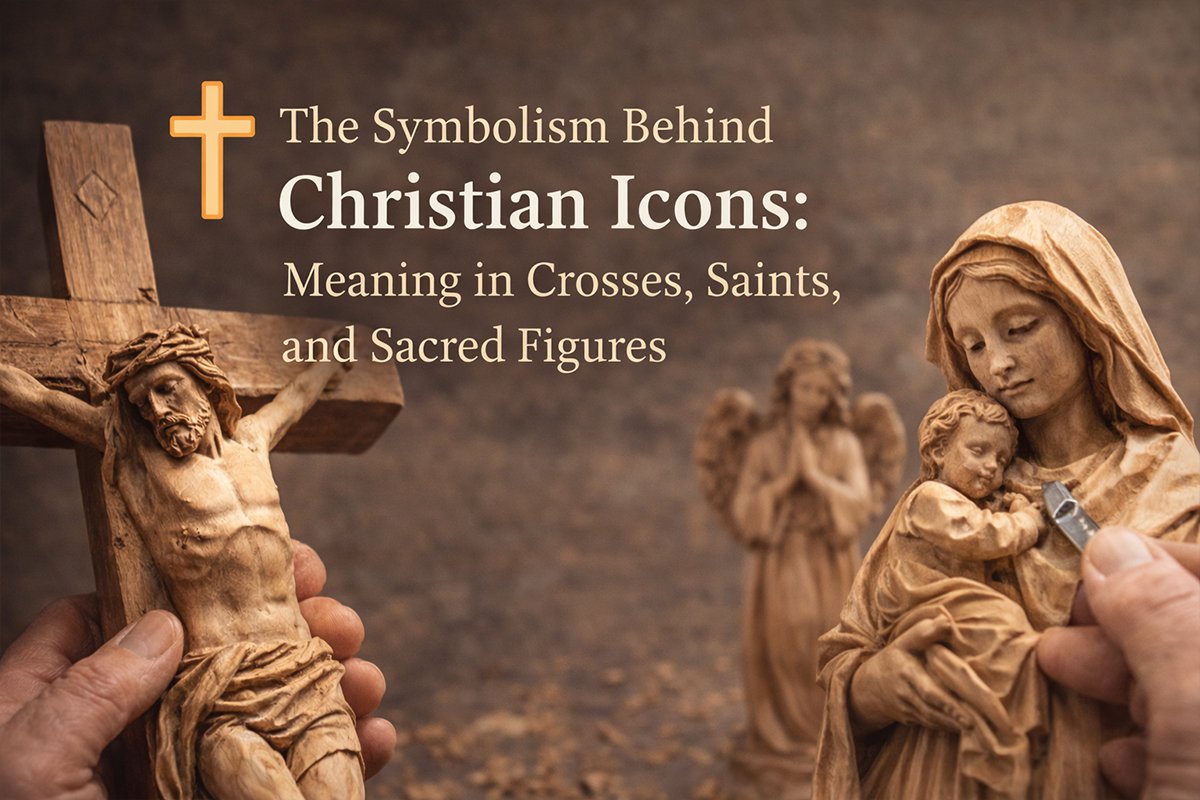
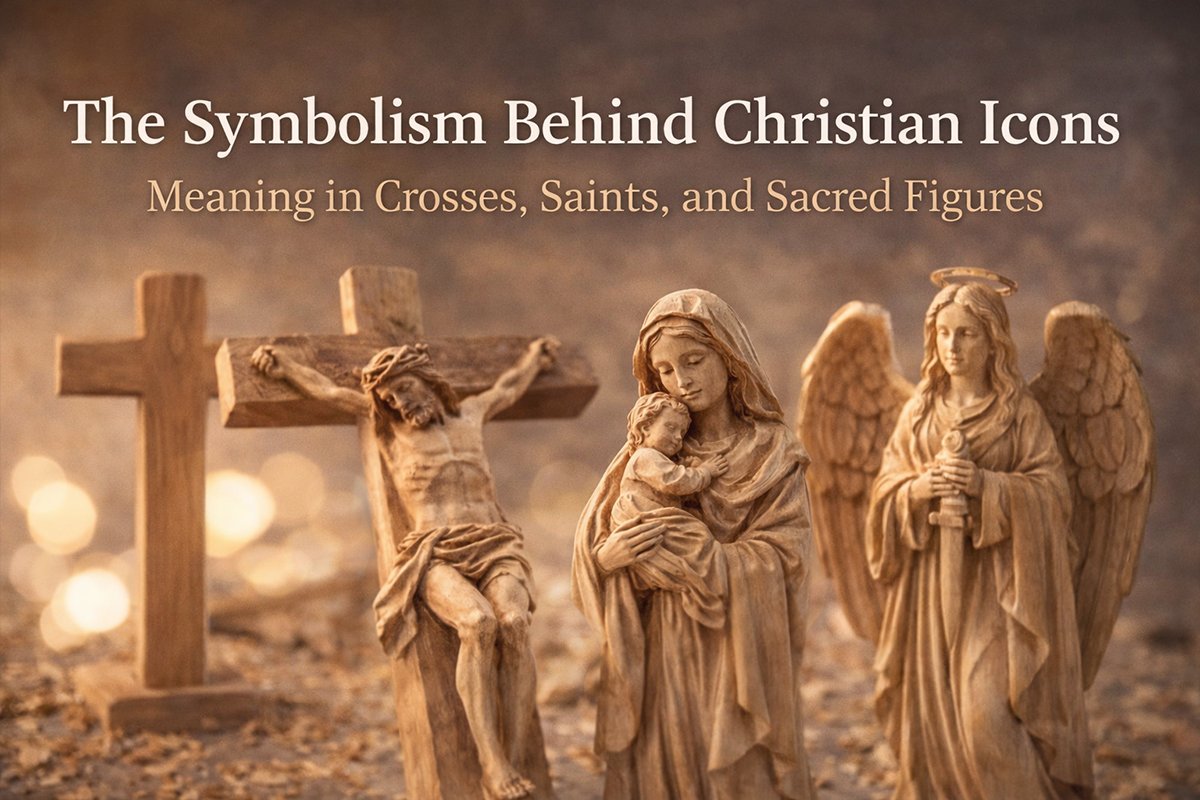
The Symbolism Behind Christian Icons: Meaning in Crosses, Saints, and Sacred Figures
10 月
Christian wood carvings symbolism carries centuries of faith, storytelling, and artistic devotion. Each carved figure—whether a cross, angel, or saint—represents layers of meaning rooted in Christian tradition. In this article, we explore how these symbols developed and why they continue to inspire believers today.
1. The Cross: A Symbol of Sacrifice, Love, and Redemption
The cross is the most recognizable Christian symbol.
Across different cultures, it represents:
- Sacrifice — Christ giving His life for humanity
- Protection — a reminder of divine presence
- Hope — light after suffering
Wooden crosses in particular carry a sense of authenticity and humility, echoing the simplicity of the original cross in biblical tradition.
2. Jesus Christ: Compassion, Strength, and Eternal Life
Icons of Jesus appear in many forms—Sacred Heart, Crucifix, Good Shepherd, Risen Christ.
Symbolic meanings include:
- Sacred Heart — love, mercy, and forgiveness
- Crucifix — sacrifice and salvation
- Good Shepherd — protection and guidance
- Risen Christ — hope, victory over death
Each representation emphasizes a different spiritual message, speaking to the needs of the believer.
3. The Virgin Mary: Purity, Motherhood, and Comfort
Mary is often shown with a gentle expression, open hands, or a protective posture.
Her symbols include:
- Blue robes — purity and grace
- Open hands — acceptance and prayer
- Crown of stars — heavenly love
- Holding Jesus — motherhood and compassion
Mary icons bring a calming presence and are often kept in homes for peace and protection.
4. Angels: Guidance, Protection, and Messages from Above
Angels appear throughout Christian stories as messengers and guardians.
Symbolic elements:
- Wings — connection between heaven and earth
- Trumpets — divine announcement
- Swords — spiritual protection
- Soft light or halos — purity and divine glory
Wood-carved angels highlight the peaceful and protective nature of these celestial beings.
5. Saints: Virtues, Courage, and the Human Journey of Faith
Saints represent courage, sacrifice, devotion, and humanity’s struggle toward goodness.
Common symbolisms:
- St. Michael — justice and spiritual warfare
- St. Joseph — family, work, and humility
- St. Francis — simplicity and love for nature
- St. Anthony — guidance and lost things
- St. Jude — hope in desperate moments
Each saint embodies a virtue that believers look up to in their own lives.
6. The Dove: Peace, Holy Spirit, and Renewal
Simple yet powerful, the dove symbolizes:
- Holy Spirit
- Peace and reconciliation
- Baptism and new beginnings
This gentle icon is often used in homes to invite serenity and spiritual clarity.
7. Nativity Scenes: Hope and the Beauty of New Beginnings
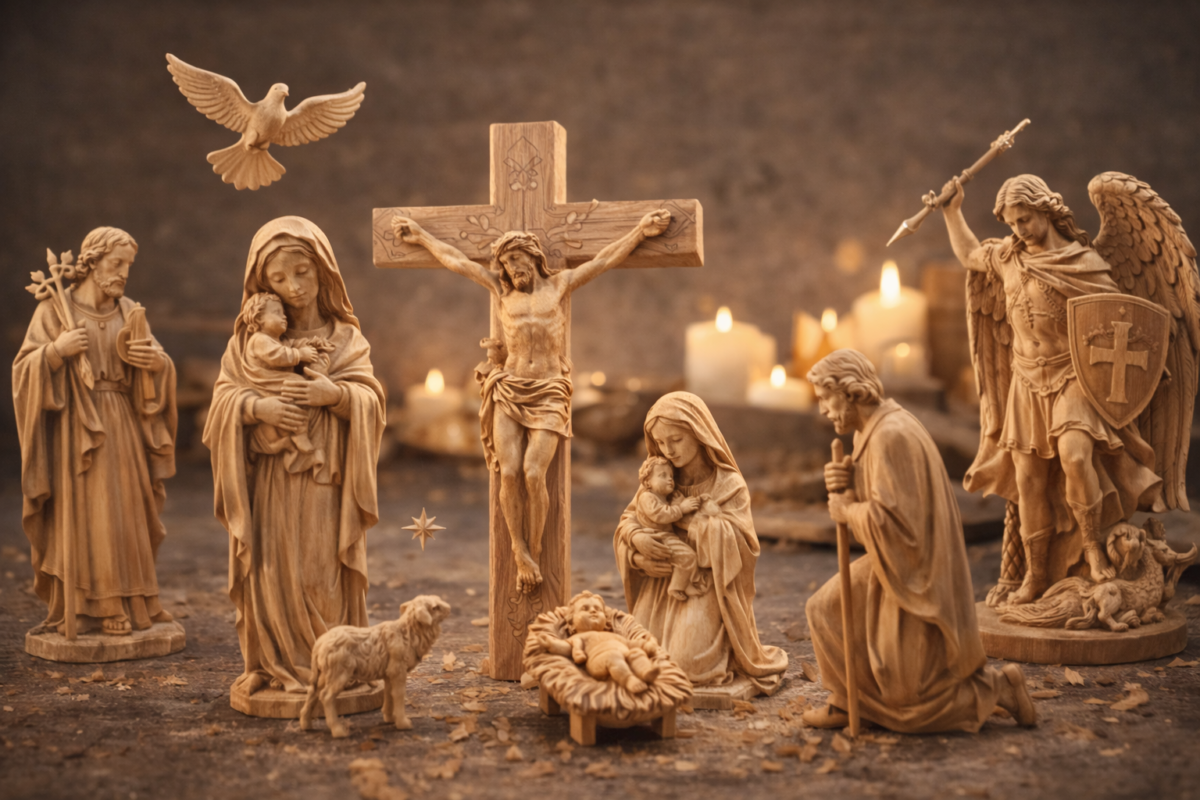
Nativity sets combine multiple symbols—Jesus, Mary, Joseph, shepherds, angels.
Their meaning includes:
- Birth of hope
- Unity among people
- Light entering the world
These scenes remind believers to slow down and cherish the miracle of new beginnings.
Beyond their decorative and devotional roles, Christian wood carvings also serve as historical records of local craftsmanship. Different regions developed unique carving styles—some favoring soft lines and gentle expressions, others highlighting dramatic contrast and bold symbolism. These variations allow us to trace cultural influences and understand how faith spread through communities over centuries.
Conclusion: Symbols That Speak Beyond Words
From crosses to angels, from saints to nativity scenes, Christian icons carry meanings that comfort, inspire, and guide.
Wood-carved icons, with their warmth and natural beauty, make these symbols feel even more intimate.
They are not only artworks.
They are stories carved into wood, messages of faith preserved in a form that lasts for generations.
