


Wood Carving & Craftsmanship
How Christian Wood Carvings Are Made: From Raw Wood to Sacred Art
Oct
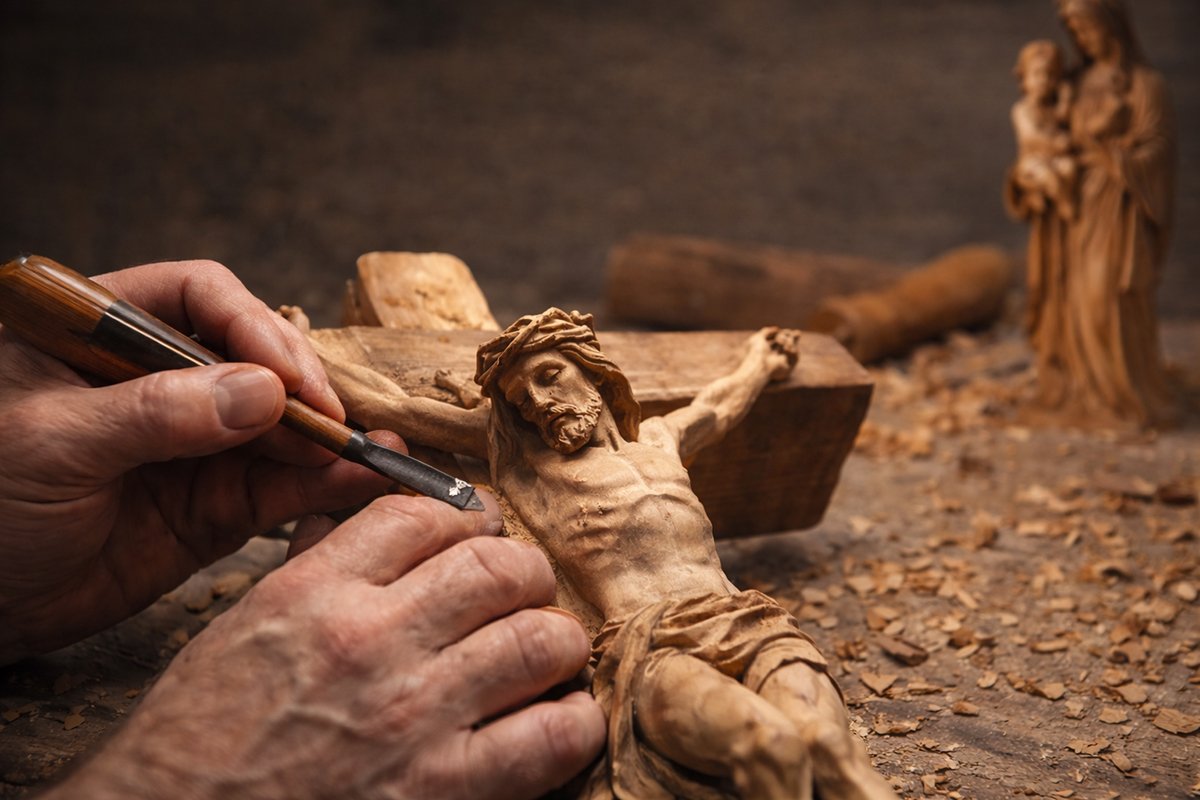
Christian wood carvings carry a quiet strength.
Behind every statue, cross, or icon is a long process that blends skill, patience, and spiritual intention. In this article, we take you behind the scenes to see how a piece of raw wood transforms into a meaningful Christian artwork.
1. Choosing the Right Wood
The journey begins with the material itself.
Not every type of wood is suitable for sacred carvings. Craftsmen carefully select woods that are stable, smooth, and symbolic.
Common woods used
- Basswood – soft, fine grains, ideal for detailed expressions
- Maple – strong and durable, perfect for crosses
- Walnut – darker tones and elegant texture
- Beech – balanced density and smooth carving surface
A good piece of wood ensures the artwork keeps its shape for decades, even generations.
2. Hand-Sketching the Concept
Before tools touch the wood, the artist sketches the form directly on the surface.
For crosses, angels, or sacred hearts, the outline must be balanced and symmetrical.
This step decides the posture, proportions, and emotional expression of the final piece.
The sketch is not just technical—it reflects the spiritual message the artist wants the piece to convey.
3. Rough Carving: Shaping the Foundation
Using knives, chisels, and woodworking tools, the craftsman removes large blocks of excess wood.
This is where the basic shape appears:
- The arms of the cross
- The silhouette of the Virgin Mary
- The body and robe of a saint
- The halo and facial outline of an angel
Rough carving requires strength and precision. One wrong cut can alter the entire posture.
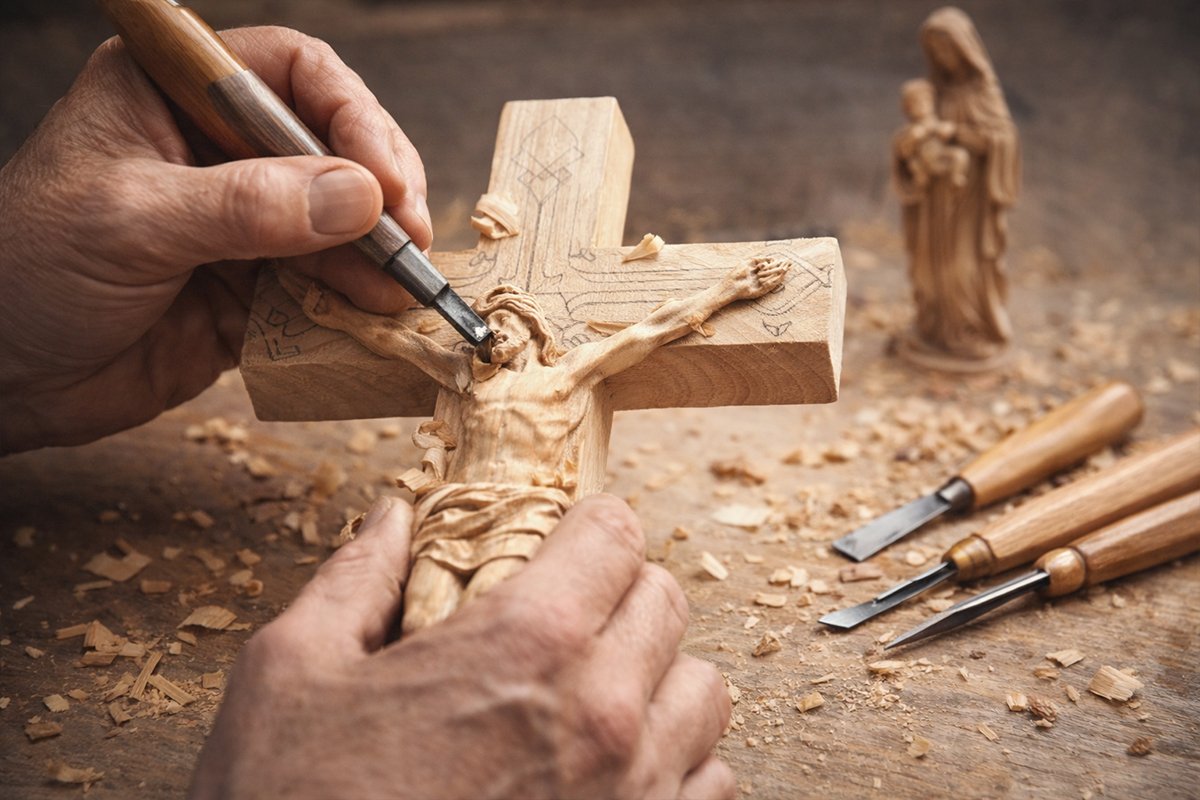
4. Fine Detailing: Bringing the Piece to Life
This is the longest and most delicate stage.
Small knives, V-tools, and mini chisels are used to carve:
- Facial expressions
- Hair and folds of clothing
- Wings, robes, and small ornaments
- Texture of wood grain or sacred symbols
This stage determines whether the artwork feels gentle, solemn, compassionate, or powerful.
Every gesture, every fold, every expression carries meaning.
5. Sanding and Refining the Surface
Once the details are complete, the piece is smoothed with multiple grades of sandpaper.
This removes small imperfections and prepares the surface for finishing.
A well-sanded carving feels:
- Soft under the hands
- Clean in the curves
- Balanced in the overall geometry
The smoother the surface, the better it absorbs paint or protective oils.
6. Coloring, Staining, or Natural Finishing
Depending on the style, Christian wood carvings may be:
✔ Left natural
To highlight purity and wood texture.
✔ Stained
To deepen the tone and show grain patterns.
✔ Hand-painted
Common for icons, angels, and nativity figures.
✔ Protected with oil or wax
To enhance durability and maintain color.
Each finish affects the character of the artwork—soft, vintage, vivid, or rustic.
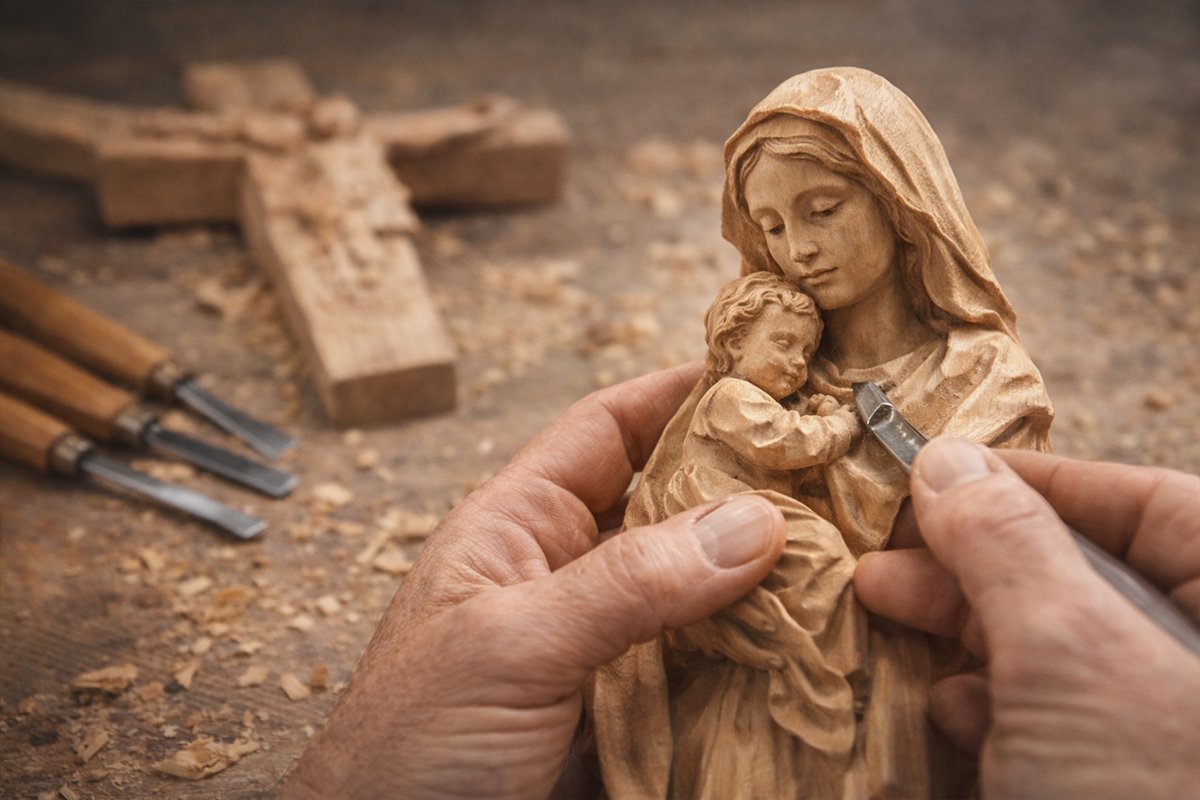
7. Final Blessing
Some Christian artisans bless the artwork before sending it out.
This tradition expresses gratitude for the craft and respect for the symbol it represents.
Not all workshops do this, but for many creators, wood carving is not just art—it is devotion.
Conclusion: More Than Craftsmanship
From raw wood to a finished sacred carving, the process is slow, patient, and deeply intentional.
Each mark of the knife carries the craftsman’s skill.
Each line and curve expresses a spiritual message.
Christian wood carving is not mass production.
It is a dialogue between faith, hands, and natural materials—creating pieces that bring comfort, blessings, and meaning into homes around the world.
